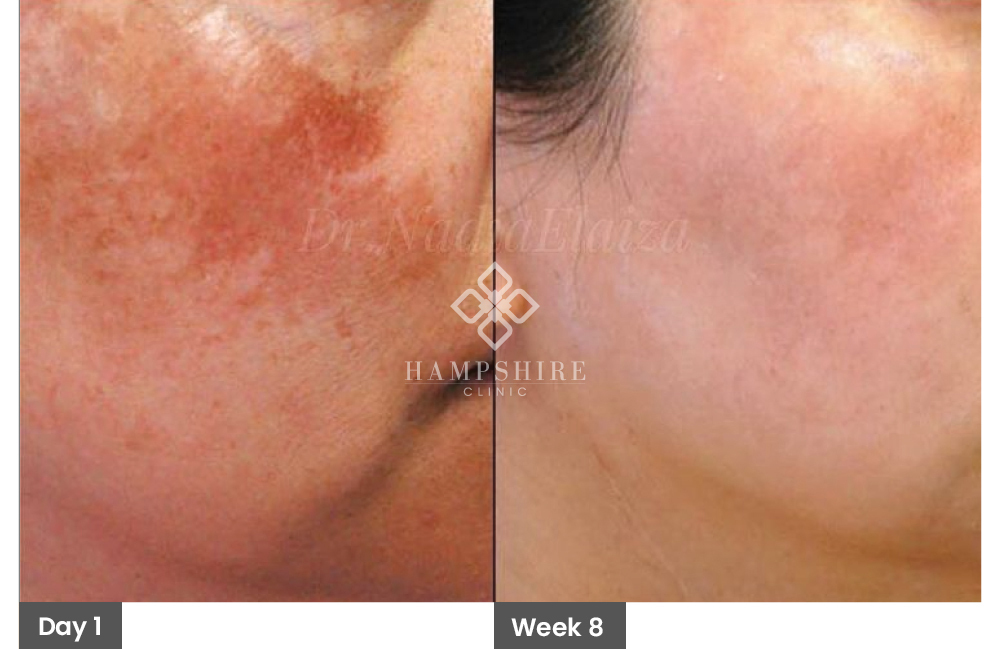
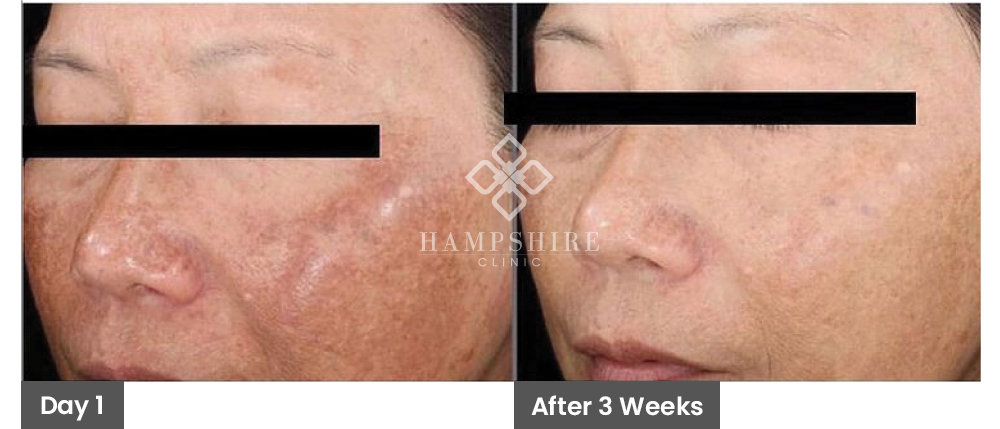
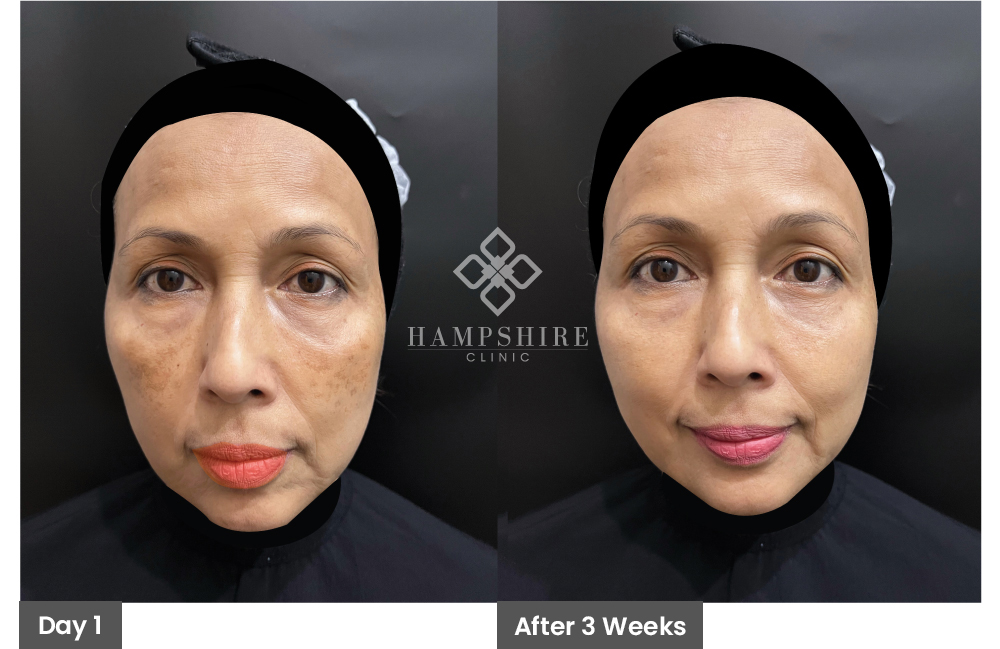
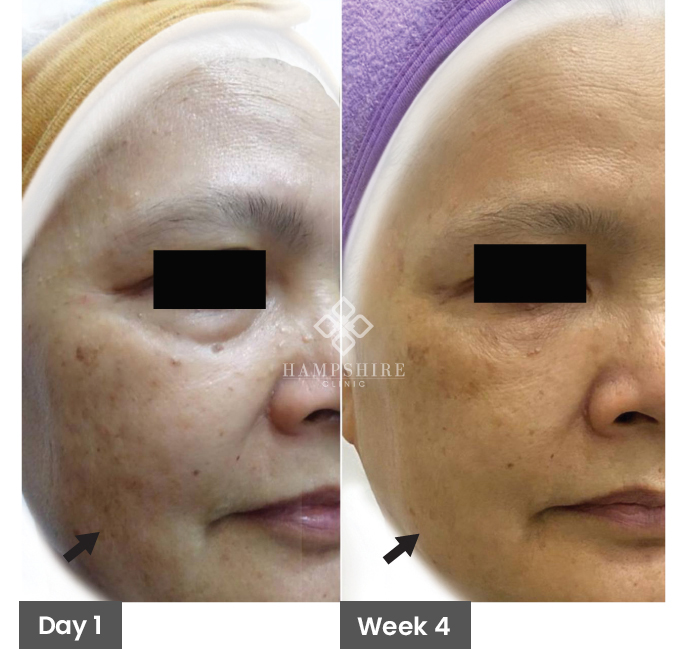
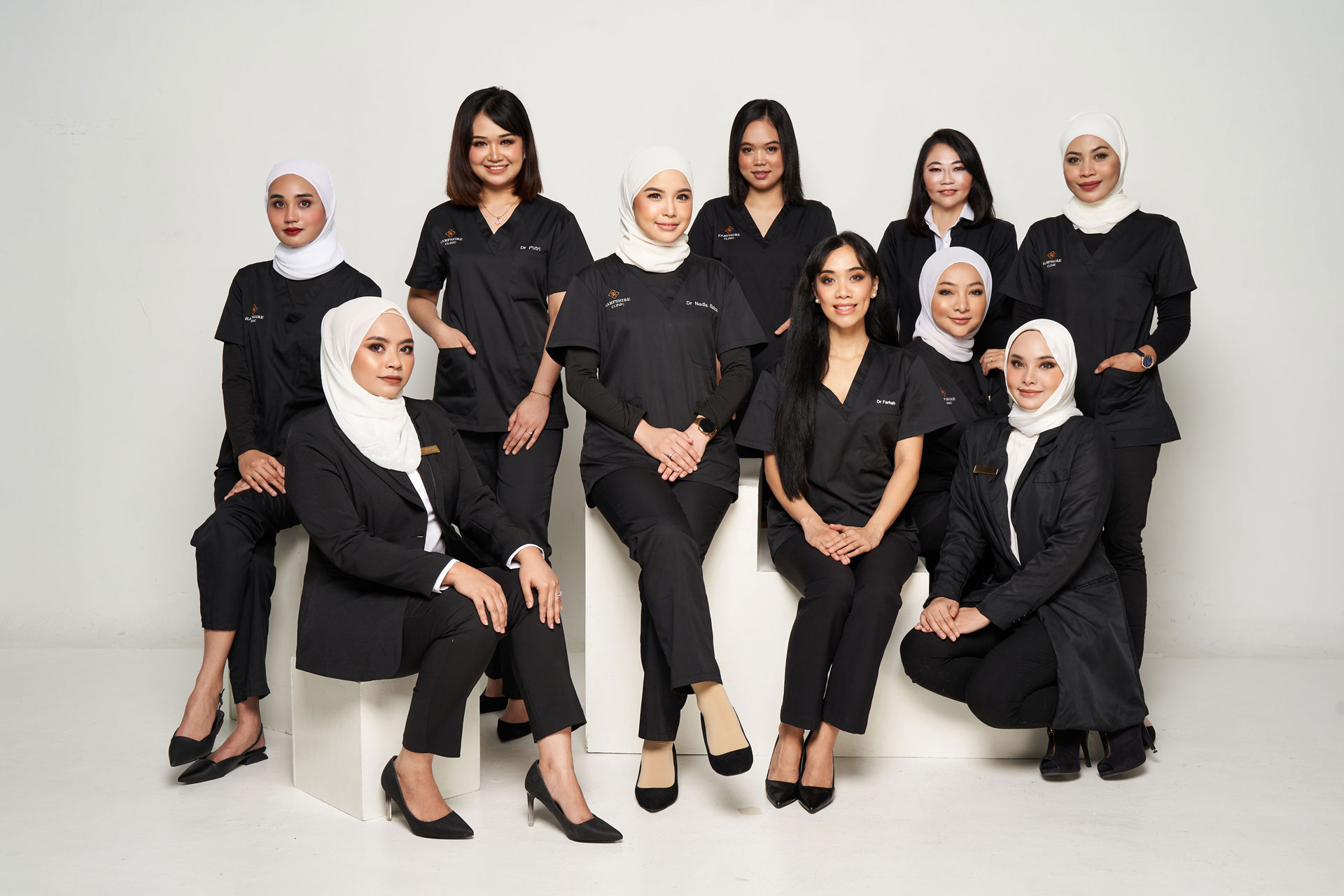
At Hampshire Clinic, we specialise in pigment problem like Melasma (also known as hormonal pigmentation or ‘mask pregnancy’) which is seen in women and men and is usually first noted between the ages of 30 – 50’s.
The founder of Hampshire Clinic, Dr. Nadia Elaiza is an expert when it comes to treating Pigmentation/Melasma. Her expertise, combined with her treatment methods gives patients the best possible chance of lightening pigment safely and effectively.
We provide laser treatment + medication to help lighten and clear pigmentation. Combining both treatments can lighten pigmentation spots to a large extent.
* The laser heats up and shatters the pigment. The pigment is then drawn to the surface without harming the surrounding tissue. Once drawn to the surface, the pigmented lesions will fade or dry and flake off the treated area, leaving the skin with an even tone and complexion
* Chemical peels have variable success in treating pigmentation/melasma. Multiple treatments are required to achieve modest benefits. They are best used in combination with topical creams. Superficial peels are preferable to medium or deep peels.
* Topical cream is the most widely used method to treat pigmentation/melasma. The higher the concentration of active ingredient, the higher the incidence of irritant dermatitis (eczema). Topical creams should therefore be used for limited periods under the supervision of your aesthetic physician.
* Medication in tablet form is another promising treatment for pigmentation/melasma. We will prescribed it for patients that her condition has not responded to topical creams.
We get to know you so our doctors can design the best pigmentation/melasma treatment for you.
Also known as a “lunctime procedure”, because minimal to no downtime is required afterwards, simply a glowing rejuvenated complexion.
Laser treatment for pigmentation/melasma is quite fast and can be completed in 4 to 8 sessions.
Using advanced technology and high-performance cosmeceutical skincare products our team is experienced in delivering best-in-class results.
Our highly-skilled and experienced team of doctors and therapists are trained in the latest technology and operate the safest machinery.
Amazing experience from this special clinic. The whole team is really friendly. I always look forward for my sessions. The result are wonderful too. If you are looking around around for skin clinic, you may stop searching and come to Hampshire Clinic
Highly recommended aesthetic clinic...excellent services and treatments...nice and friendly staffs and Doctors...I love this place...I am pretty sure you gonna love it too...you will definitely look prettier and younger after every visit...
My first time came here & didn't expect se-best ini. The staff was friendly, the doctor was so kind and faham our condition. They will suggest us the best treatment yang sesuai dengan kulit muka kita. BEST & DEFINITELY WILL COME AGAIN
Melasma appears as patchy shades of brown pigmentation on sun exposed areas of the face. Melasma is more commonly seen in females and those with darker skin types and usually gets worse in summer.
It typically occurs on the face, affecting the cheeks, forehead, upper lips, nose and sometimes the forearms.
The cause of melasma is unknown but many different factors may play a role. These include genetics, sun exposure and hormonal changes (e.g. using the oral contraceptive pill, pregnancy).
People with skin of colour (pigmented skin), including those with Asian, Hispanic, Middle Eastern and Mediterranean ancestry are more prone to developing this
condition.
Ultraviolet radiation stimulates melanocytes (pigment producing cells) to produce more melanin (pigment). Recent studies have shown that blood vessel abnormalities within the patches of melasma can also contribute to excessive pigmentation.
Melanin in the superficial layer (epidermis) of the skin is relatively easy to treat and responds well to topical agents such cosmeceuticals /chemical peels and laser therapy. However melasma often affects both the superficial and deeper (dermis) layers.
This mixed type is more challenging to treat and it could take weeks to months to see an improvement.
In order to treat melasma, combination or specially formulated creams may be prescribed. The ingredients in these creams have the ability to slow down the production rate of melanin by the melanocytes.
At Hampshire Clinic, we offer multiple treatments and devices to treat Melasma, including the following:
• Qswitch laser
• Pico laser
• Chemical peel
The treatment plan depends on the individual and is provided by the therapist after the examination of the pigmentation. Usually, it takes around 4 to 6 sessions which are spaced 2 weeks away from one another
When administered under the expert guidance of our aesthetic physicians, the treatment does not cause any side-effects except some redness, if any (this varies from patient to patient).
There is a very small risk of worsening Melasma or increased darkening after laser treatments. However, without proper care, the Melasma is prone to coming back. Sun protection can help to prevent it from returning.
Sun exposure: Exposure to the sun’s rays can make melasma worse and this
includes being in the heat and visible light. It doesn’t have to be a very hot
day out, but if the su is beaming on your skin, the Melasma can immediately
get worse.
Laser treatments are the fastest way to remove pigmentation/melasma, but it still takes time to see results. Pigment will darken for 1-3 weeks following the treatment, then will begin to fade.
Depend on the individual, however usually the result can start be seen starting 2-3 weeks.
Depend on the individual, every individual is different. A consultation and assessment need to be done by a doctor to know how many session are required for you.


Hampshire Clinic is a Certified & Registered Aesthetic & Medical Clinic by the Ministry of Health. All treatments and procedures are done by Board Certified Aesthetic Physicians (LCP) and well-trained healthcare professionals.
WhatsApp us
Izzati Nor